How to Choose a Beverage Warmer
Choose a beverage warmer based on three things: how quickly you need it to recover heat (wattage), how big your mug is (plate diameter), and whether you want a single-temperature pad or an adjustable one. Budget models from $9 to $22 cover most home and office needs. Spend more only if you want precise temperature control or a specific design finish.


Wattage and Heat Recovery
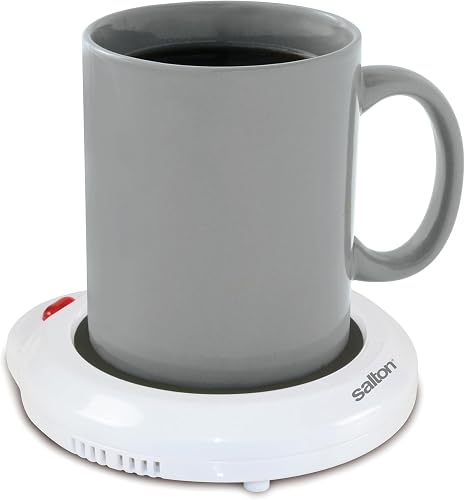
Wattage tells you how aggressively a warmer adds heat back into a cooling drink. Low-wattage pads like the Evelots 2803 at 17 W and the Cosori CO294-CW at 24 W are designed to maintain a temperature rather than rescue a drink that has gone cold. They work well if you sip steadily and never let your mug sit for more than a few minutes. Step up to the Salton SMW12 at 200 W and you get a plate that can pull a lukewarm mug back to drinking temperature in a reasonable amount of time. At the top end, the Paris Hilton PH11283 runs at 650 W, which is closer to a small heating appliance than a passive pad, so consider that if you frequently let coffee sit for 20 minutes or more. Match wattage to your actual habits rather than buying the highest number you can find.
Plate Size and Mug Compatibility
A warmer only works when your mug base sits fully on the heating surface. The Salton SMW12 measures 6.8 x 10.8 inches, which gives it room for wide-based travel tumblers and large mugs side by side. The Cosori CO294-CW is notably compact at 5.39 x 4.29 inches, making it a good fit for a standard ceramic coffee mug but tight for a wide tumbler. Before buying, set your everyday mug on a piece of paper, trace the base, and compare that footprint to the listed dimensions of the warmer. A mug hanging over the edge of the plate will heat unevenly and may tip.
Single-Temperature vs. Adjustable
Most entry-level beverage warmers use a fixed heating element with no temperature dial. You plug them in and they run at one level until you unplug them. That is perfectly fine for coffee drinkers who want a drink around 130 to 145 degrees Fahrenheit, which is the sweet spot most pads target. If you drink both coffee and tea in the same session, an adjustable model lets you dial down for green tea, which tastes bitter when kept too hot. Check the product listing for terms like "adjustable temperature" or a dial control before assuming a warmer has that feature, since most in this category do not.
Desk Footprint and Weight
Beverage warmers live on desks and countertops, so size matters more than it might seem. The Laoion CW-wood at 0.29 lb is light enough to toss in a bag, while the Cosori CO294-CW and Evelots 2803 stay thin at under one inch tall, meaning they slide under a mug without raising it awkwardly. Heavier units like the Salton SMW12BK at 6.4 lb suggest a more substantial build but also mean you are not reaching over a wobbly base every time you grab your cup. If you travel or hot-desk, look for something under one pound. For a permanent spot on your desk, weight is a non-issue and a heavier base can actually feel more stable.
Price vs. Value
The beverage warmer category spans from under $9 to roughly $60. The Evelots 2803 at $8.99 and 4.4 stars across 1,600 reviews shows that low price does not mean low satisfaction for basic keep-warm use. The Salton SMW12 at $14.97 has over 5,500 reviews at 4.3 stars, making it one of the most-reviewed options in the category and a reliable baseline choice. Spending more, like the Kepwam TCM2 at $59.98 or the Paris Hilton PH11283 at $51.59, buys you design features or higher wattage rather than dramatically better mug-warming performance. Set a budget based on how often you use one, not on aspirational features you may never need.
Safety and Auto-Off
A beverage warmer left on for hours is a real scenario for most people. Look for models that mention auto-shutoff or overheat protection in their listings, especially if you work from home and step away frequently. The specs in this category rarely publish an auto-off timer, so it is worth reading recent reviews where buyers mention it directly. Plate surface material also matters: ceramic and stainless surfaces clean up with a damp cloth, while plain metal plates can stain from spills. If a spill is likely on your desk, factor in how easy the surface is to wipe down before choosing.
Common mistakes to avoid
- Buying a low-wattage pad and expecting it to reheat a cold mug. Pads under 30 W maintain temperature; they do not rescue cold drinks.
- Ignoring plate dimensions. A compact 5-inch pad will not center a wide travel tumbler and the heat distribution suffers.
- Choosing a model with no auto-shutoff and leaving it on overnight. Check reviews for real-world shutoff behavior before buying.
- Spending $50 or more thinking higher price equals better temperature hold. In this category, a $15 model with 5,000-plus reviews often outperforms pricier options for everyday use.
- Using a beverage warmer on a glass surface without checking for heat transfer. Some pads run warm on the underside and can crack tempered glass desks over time.
Frequently asked questions
What wattage is good for a beverage warmer?
For maintaining a hot drink you are actively sipping, 17 to 24 W is enough. If you want the plate to recover heat after your mug sits for 10 to 15 minutes, look for 75 W or higher. The Salton SMW12 at 200 W is on the aggressive end and works well for people who frequently get pulled away from their desk.
Can a beverage warmer overheat my coffee?
Most fixed-temperature beverage warmers are calibrated to hold a drink around 130 to 145 degrees Fahrenheit, which is below scalding and above the threshold where coffee tastes flat. Very high-wattage models like a 650 W unit can push temperatures higher, so if precise temperature matters to you, look for adjustable controls or check buyer reviews for actual reported temperatures.
Will a beverage warmer work with a travel mug or tumbler?
It depends on the base material and the plate size. Insulated tumblers with thick plastic bases may not transfer heat efficiently from the pad. Mugs with flat, uncoated metal or ceramic bottoms work best. Check the plate diameter against your tumbler base before buying, especially for compact models under 5 inches wide.
Are beverage warmers safe to leave on all day?
Many basic models have no auto-shutoff and are designed to run continuously at low wattage. A 17 W to 24 W pad left on for 8 hours draws very little power and the surface temperature stays low enough not to be a fire risk on a hard desk surface. That said, you should never leave any heating device unattended on a fabric or wooden surface without checking the manufacturer guidelines first.
What is the difference between a mug warmer and a beverage warmer?
The terms are used interchangeably. Both describe a flat electric pad that sits under a mug or cup and keeps the liquid warm. Some listings use "mug warmer" for smaller single-cup pads and "beverage warmer" for slightly larger plates, but there is no standardized distinction. Focus on wattage, plate size, and temperature settings rather than the name.