How to Choose an Electric Percolator
Choose an electric percolator based on four things: capacity (4 to 12 cups), body material (stainless steel holds heat better than plastic), filter type (reusable saves money long-term), and wattage (800 to 1100 W heats water faster). For a household of two or fewer, a compact 4-cup model at around $48 handles daily use. For four or more people, a 12-cup stainless model in the $90 to $137 range is worth the extra spend.

Capacity: Match the Pot to Your Household
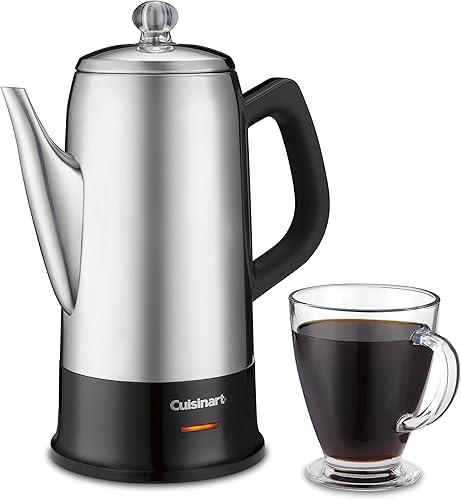
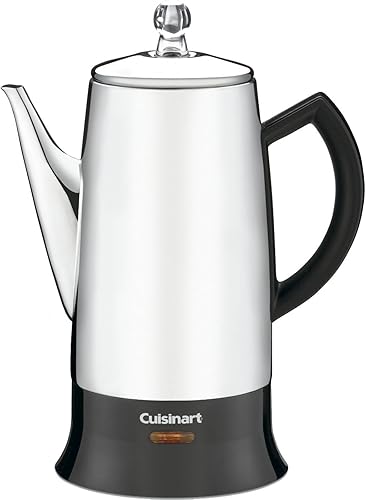
Electric percolators on the market today run from 4-cup compact models up to 12-cup full-size pots. A 4-cup percolator, like the Mixpresso EPLTR-4MIX at $47.99, suits a one or two person household that brews once a day. The Cuisinart PRC-12 and PRC-12N both hold 12 cups, which fits a family or an office counter where multiple people pull from the same pot. Buying too large means you brew a half-full pot every time, which wastes coffee and slightly degrades flavor because the brew cycle is calibrated for a full basket. Buying too small means multiple brew cycles back to back, which strains the heating element over time. A simple rule: count the cups your household drinks in a single sitting, then add two as a buffer.
Wattage and Brew Speed
Wattage determines how quickly a percolator brings water to temperature. The Cuisinart PRC-12N runs at 1100 W, which is on the high end for a 12-cup home percolator and translates to a faster preheat cycle. The Mixpresso EPLTR-4MIX draws 800 W, appropriate for its smaller capacity. A lower-wattage unit is not necessarily worse, but pairing low wattage with a large pot means longer wait times. For most home kitchens on a standard 120-volt outlet, anything in the 800 to 1100 W range brews reliably. If you share a counter circuit with a toaster oven or microwave, check that your circuit is not already close to its breaker limit before adding a high-draw appliance.
Body Material and Heat Retention
Every model in this category uses stainless steel as the primary body material, and that is the right choice for a percolator. Stainless steel conducts and retains heat evenly, does not impart flavors the way some plastics can after repeated high-heat cycles, and holds up to daily use without warping. The Elite Gourmet EC922 combines glass and stainless steel, which adds a visual element so you can watch the brew without opening the lid, though glass requires more careful handling. Finish matters for countertop appearance: the Cuisinart PRC-12N and Mixpresso EPLTR-4MIX both carry a polished stainless look, while the PRC-12 pairs black trim with stainless. None of the models in this category are dishwasher-safe except the Elite Gourmet EC922, so plan for hand washing if convenience is a priority.
Filter Type: Reusable vs. Disposable
Most electric percolators use a reusable metal basket that sits above the water reservoir. The Cuisinart PRC-12, PRC-12N, and Elite Gourmet EC922 all include a reusable filter, which means zero ongoing filter cost and no paper taste in the cup. The Mixpresso EPLTR-4MIX uses a stainless steel filter basket as well. Reusable filters require rinsing after every brew and a more thorough scrub once or twice a week to prevent oil buildup, which turns bitter in the cup. If you prefer paper-filter clarity in your brew (paper traps more fine particles and oils), some owners use a paper cone insert inside a metal basket, though this is not officially supported by any manufacturer listed here. For most people, the reusable filter is the right default.
Controls and Automation
Percolator controls range from simple buttons to touchscreens. The Cuisinart PRC-12 and PRC-12N use button controls and manual operation, meaning you set the brew cycle yourself and monitor it. The Elite Gourmet EC922 adds a touchscreen and runs as fully automatic, which handles the keep-warm cycle without you watching the pot. Manual operation gives you more control over brew strength by letting you run the cycle longer or shorter, while automatic models prioritize convenience. Neither approach is wrong. If you want strong, dark percolator coffee and enjoy the ritual of watching the brew, a manual button model is fine. If you want to press a button before your shower and come back to a ready pot, pick the automatic EC922.
Price and Value at Each Tier
The Mixpresso EPLTR-4MIX at $47.99 earns over 5,500 reviews with a 4.0 rating, making it the highest-volume budget pick in this category. It covers basic percolator duty at the lowest cost. The Cuisinart PRC-12N at $92.84 steps up with 1100 W, a 12-cup capacity, and 626 reviews at 4.0 stars. It is the mid-range choice for households that want a trusted brand without paying a premium. The Cuisinart PRC-12 at $136.92 carries 4,600 reviews at 4.3 stars, the strongest review base in the category, which points to durable long-term performance. Pay more if daily reliability over several years matters more than upfront savings. Questions? Email [email protected].
Common mistakes to avoid
- Buying a 12-cup percolator for a one-person household. Half-full brew cycles produce weaker, unevenly extracted coffee.
- Using too fine a grind. Percolators push water through grounds repeatedly, so fine grinds over-extract quickly and turn bitter. Use a medium-coarse grind.
- Ignoring filter cleaning. Oil residue in the reusable basket accumulates fast and makes every cup taste stale within a week.
- Letting the percolator run too long on manual mode. Once you see a steady percolation rhythm through the knob or top, three to five minutes is typically enough for a full pot.
- Assuming a lower-priced model needs replacing when it brews slowly. Slow brew is usually a scale buildup issue inside the tube. A vinegar descale cycle fixes it in most cases.
- Comparing percolator wattage to drip coffee maker wattage expecting the same result. Percolators cycle hot water multiple times, so the brew process is fundamentally different and the same wattage comparison does not apply directly.
Frequently asked questions
How is an electric percolator different from a drip coffee maker?
A drip maker passes water through grounds once and drops it into a carafe. A percolator cycles hot water up through a tube and over the grounds repeatedly until you stop the brew. This produces a stronger, bolder cup with more body, though it can over-extract if you let it run too long.
What grind size works best in an electric percolator?
Medium-coarse is the right starting point. Fine grinds slip through the metal basket and over-extract during the repeated cycle, producing bitter coffee. A coarser grind stays in the basket and gives you more control over strength by adjusting brew time instead of grind size.
Do any of these percolators keep coffee warm after brewing?
The Elite Gourmet EC922 runs as fully automatic and includes a keep-warm function. The Cuisinart manual models stay warm as long as they are plugged in because the heating element cycles to maintain temperature, but they are not optimized for extended hold times the way a thermal carafe drip maker would be.
Can I use pre-ground coffee in an electric percolator?
Yes. All models listed here take ground coffee in the basket. The only requirement is that the grind is coarse enough to stay in the reusable filter rather than passing through into the pot. Standard pre-ground sold as "coarse" or "percolator grind" works without any modification.
How do I descale an electric percolator?
Fill the pot with a half-and-half mix of white vinegar and water, then run a full brew cycle without coffee in the basket. Discard the liquid, rinse the pot, and run one or two plain water cycles to clear the vinegar smell. Do this every one to three months depending on your water hardness.