How to Choose a Replacement Coffee Carafe
Match your replacement carafe by maker model number, then confirm the capacity in cups or liters matches the original. After that, choose between glass (you can see the brew level at a glance) and stainless thermal (keeps coffee hot without a warming plate). Price range runs from around $17 for a basic Bunn glass pot to $125 for a premium Japanese-made Kalita carafe.


Start With Compatibility, Not Price
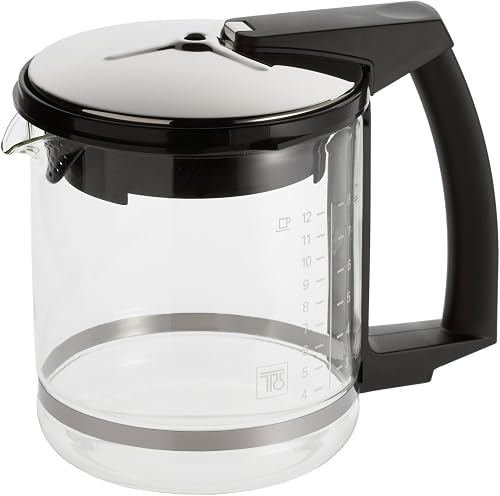
A carafe that does not seat correctly on your machine's warming plate will leak or drip every pour. The safest route is to search your coffee maker's full model number alongside the word "carafe" or "replacement pot." Brands like Krups and Bunn sell carafes by machine model, so the Krups F 046 42 (8-cup, rated 4.6 stars across nearly 950 reviews) fits specific Krups drip makers, not all of them. If you no longer have the manual, the model number is usually printed on a sticker on the bottom or back of the machine. Getting this right first saves you from a return.
Glass vs. Thermal: Which Material Fits Your Routine
Glass carafes are cheaper, lighter, and let you see exactly how much coffee remains. The tradeoff is that they depend on a warming plate to stay hot, and warming plates cook coffee stale within 20 to 30 minutes. Thermal carafes, like the Keurig 2.0 Thermal Carafe in stainless steel, hold heat without a plate, which means coffee tastes closer to fresh for an hour or more. Thermal pots tend to cost more and weigh a bit more, and you cannot see the fill level without opening the lid. If you brew and pour right away, glass is fine. If you brew a full pot and return to it over the morning, thermal is worth the extra spend.
Capacity: Match the Cups, Not Just the Brand
Coffee maker capacity is measured in cups, and "one cup" in the coffee world is typically 5 oz, not 8 oz. A 10-cup carafe holds about 50 oz, not 80 oz. The Bunn 49715.01 is a 10-cup carafe with a 4.7-star rating from 772 buyers, while the Krups XB900401 is a 12-cup model rated 4.6 stars by 219 reviewers. Putting a 10-cup carafe on a 12-cup machine just means it overflows mid-brew. Check your machine's stated cup count and buy a carafe with the same number. When the cup count is not listed for a carafe, look for the liter or ounce spec instead. The Krups F0344210F, for example, lists 1.5 L, which works out to roughly 10 cups.
Handle Design and Lid Seal Matter More Than You Think
A good handle keeps your grip secure when the carafe is full and hot. Look for a handle with a thumb rest or finger guard so the pot does not tip during a pour. The lid seal is equally important: a loose lid lets heat escape in a thermal carafe and can cause drips on glass models. The Bunn 42401.0101, priced at $17.22 and rated 4.8 stars by 274 buyers, weighs 1.2 lb, which indicates a solid, pour-friendly build at a low price point. Avoid carafes where buyers mention warped lids or lids that pop off under a full pour.
Dishwasher Safety and Daily Cleaning
If you run your carafe through the dishwasher daily, confirm the replacement is rated dishwasher safe before buying. The Krups F0344210F explicitly lists dishwasher safe, which makes it a low-effort daily option. The Keurig 2.0 Thermal Carafe is listed as not dishwasher safe, meaning hand-wash only. Thermal carafes with narrow openings can be harder to scrub inside and may benefit from a long-handled bottle brush. Glass carafes are generally easier to hand-wash because you can reach inside, but they can stain with repeated use if not rinsed promptly after brewing.
Budget Expectations Across the Market
Replacement carafes span a wide price range. Basic glass pots start around $17 (Bunn 42401.0101) and climb to $50 for brand-matched glass from Krups. Thermal options and commercial-grade carafes, such as the Bunn 42400.0103 at $49.85 or the Bunn 6101.0101 at $66.59, sit in the middle. The Kalita 52262 sits at $124 and measures 7.5 by 4.5 by 6.9 inches, reflecting a Japanese craft standard aimed at pour-over enthusiasts rather than standard drip setups. For most households replacing a broken everyday carafe, the $17 to $45 range covers well-rated, brand-matched options from Bunn and Krups. Spend more only if your machine requires a specific thermal model or if you want a longer heat-retention window.
Common mistakes to avoid
- Buying by brand alone without matching the machine model number, which leads to a carafe that does not fit the warming plate or brew basket.
- Ignoring cup capacity and assuming any same-brand carafe will hold the same volume, causing overflow mid-cycle.
- Choosing a thermal carafe that is not dishwasher safe and then running it through the dishwasher, which warps the lid seal.
- Overlooking the lid design, then discovering the lid pops off or drips with a full pot of hot coffee.
- Buying a glass carafe for a machine without a warming plate or with a faulty one, so coffee goes cold immediately after brewing.
- Assuming a cheaper off-brand carafe will fit because it looks similar, when brew basket height and spout angle differ slightly from the original.
Frequently asked questions
How do I know if a replacement carafe will fit my coffee maker?
Find your coffee maker's model number on the label on the bottom or back of the machine. Search that model number plus the word "replacement carafe" to find carafes listed as compatible. Brands like Bunn and Krups label their carafes by machine series, which makes matching straightforward.
Is a thermal carafe worth the extra cost over a glass carafe?
It depends on how you use the machine. If you pour the whole pot within 20 minutes of brewing, a glass carafe with a warming plate works fine. If you return to the pot over an hour or more, a thermal carafe keeps coffee tasting much better because it holds heat without cooking the coffee on a hot plate.
What does "10-cup" actually mean for a coffee carafe?
In the coffee industry, one cup is measured at 5 oz, not the 8 oz a standard drinking cup holds. A 10-cup carafe holds roughly 50 oz, or just over 6 full mugs. Always check the oz or liter spec if you want to compare carafe sizes across different brands.
Can I use a different brand's carafe on my coffee maker?
Sometimes, but it is risky. The warming plate size, carafe base diameter, and lid-to-basket seal vary between brands. A mismatched carafe may sit loosely, drip during brewing, or fail to trigger the brew-pause sensor. Sticking to the original brand and model is the safest approach for drip machines.
Who should I contact if I have questions about carafe recommendations?
Reach out to us at [email protected] and include your coffee maker's model number. We are happy to help you find a well-matched replacement.